How Rural Families Passed Down Practical Skills
See how rural families passed down practical skills through shared work, local knowledge, and conversation—and how those methods shaped everyday livelihoods.
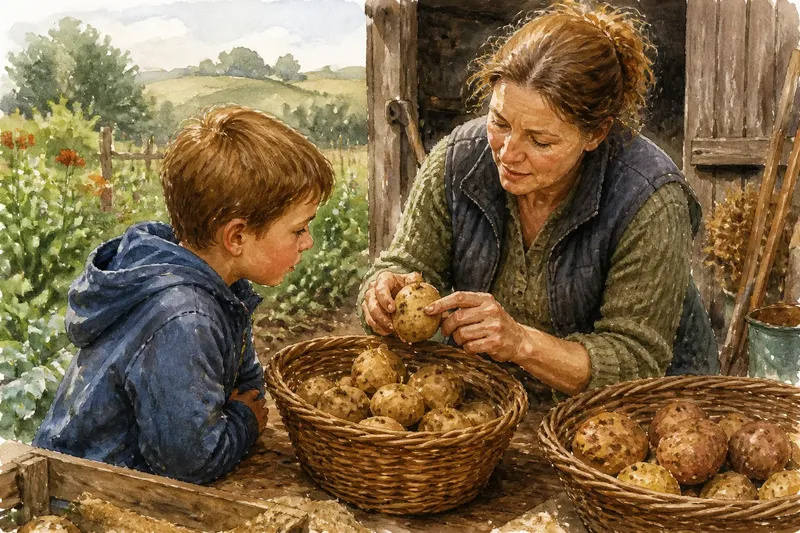
At the edge of a garden, a child watches a relative sort seed potatoes into separate baskets. One basket is for planting, another for the kitchen; the child asks about a soft spot and gets an answer tied to what they can see. In many rural households and working communities, practical skills passed between generations through moments like this—not through one universal system, but through local work, relationships, and the needs of a particular place.
Rural skill transmission
Before formal courses were widely available in a community, learning might happen at home, on a farm, in a workshop, or alongside seasonal work. A young person could begin with a manageable task, such as carrying tools or sorting produce, and gradually take on more as a knowledgeable adult judged them ready.
That pattern varied by region, period, household, and livelihood. A fishing family, a small farm, and a rural repair shop did not pass on the same knowledge or use the same teaching habits. It is more accurate to describe shared-work learning as one recurring way skills could travel than to treat it as a single history of all countryside communities.
Skills could also move beyond families. Neighbors, hired workers, craft practitioners, and community members might share methods when their work brought them together. Who had access to that knowledge depended on local relationships and opportunities, so informal teaching was not equally available to everyone.
Work as a classroom
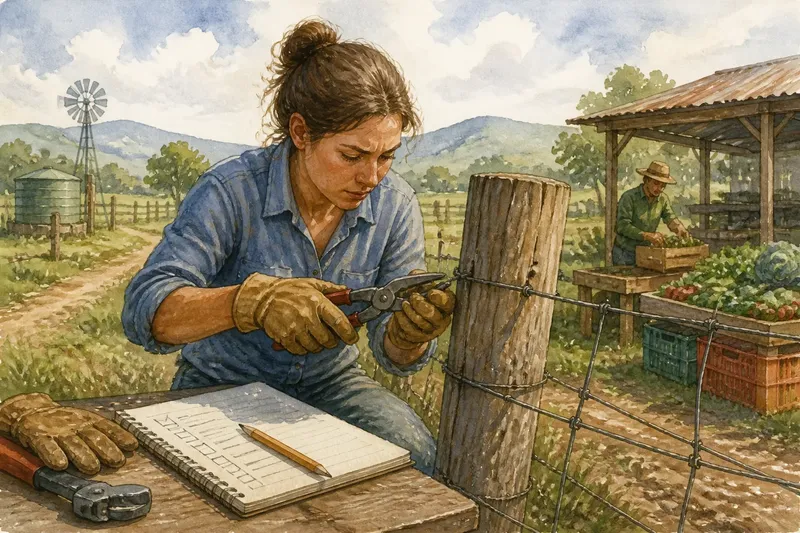
A shared task connected an action to its purpose. While helping prepare a field or mend a gate, a learner could see how tools were chosen, how work was divided, and what counted as a finished job. Those details often mattered as much as the individual movement of a hand.
Local conditions shaped what learners were taught to notice. A person tending a sheltered garden might be shown different signs of trouble than someone working in exposed pasture. Place-specific names and judgments made a method intelligible in its setting, though they did not necessarily apply elsewhere.
Imagine a teenager helping an aunt sort apples in a shed. The starting point is a mixed crate and two empty baskets; the aunt points out bruised fruit, explains which pieces should be used soon, and asks the teenager to sort the next handful. If the teenager puts a bruised apple with fruit intended for storage, the aunt can explain the consequence and have them reconsider that choice. The expected result is a clearer distinction between condition and intended use, not a rule that applies to every crop or storage method.
Knowledge beyond words
Demonstration made timing and judgment easier to notice. “Keep the blade steady” may sound clear, but seeing how a woodworker braces a board and adjusts a grip near a knot gives the learner something specific to observe. The action can then be discussed in the context of the material and tool at hand.
Some cues are sensory: dough changing under the hands, leaves showing stress, or a tool behaving differently against a material. A teacher might point to such a cue, but the learner still needs to connect it with the decision that follows. Simply copying a movement can miss why it was chosen.
Spoken explanation had its own role. It could give a task a name, explain its purpose, describe a hazard, or tell a learner why an experienced worker changed course. Pairing words with visible work helped connect a general instruction to a particular situation.
Limits of inherited methods
Knowledge passed down through families and neighbors could be useful without being complete or universally sound. A method might depend on local materials, tools, or conditions; another might need reconsideration as those conditions changed. Knowing the reason behind a practice made it easier to judge whether it still fit.
Informal teaching could also leave gaps. A skilled person might skip a familiar step when explaining a task, or a learner might not have access to someone able to demonstrate it. For work involving significant hazards, regulated responsibilities, or specialist skills, informal advice alone may not be enough; seek appropriate instruction or a qualified professional.
It is not worth romanticizing inherited knowledge as automatically better than formal instruction. Each can contribute something different: experience can make local cues visible, while structured teaching can clarify concepts, standards, and safety requirements.
Making know-how visible
When passing on a rural skill, a few deliberate choices can help a learner understand the work rather than merely copy it:
- State the purpose: If the learner can explain what the task is meant to achieve, let them begin; if not, give the purpose in plain language before starting.
- Show the sequence: If the whole action can be demonstrated safely, show it from beginning to end; if a part is unsafe or unsuitable to demonstrate, explain it and arrange appropriate supervision.
- Name a cue: If a visible or sensory sign affects the next decision, point it out and say what you would do; if the cue is unclear, pause and examine the material or conditions together.
- Offer a suitable task: If the learner can manage a small part safely, let them try it; if not, keep them observing until they are ready or find a suitable instructor.
- Check the result: If the outcome fits the stated purpose, explain what went well; if it does not, identify the difference and demonstrate the relevant part again.
- Explain changes: If you adjust your method, say what changed in the material, tool, or conditions; if the reason is uncertain, stop and seek advice rather than presenting a guess as a rule.
Too much narration is not useful. Listing every hand movement can distract from the few cues that matter; focus on the decisions a learner needs to understand, then leave room for questions and observation.
Learning without family ties?
Can I learn a rural skill without relatives nearby?
Often, you can look for a community garden, cooperative, local workshop, experienced coworker, or neighbor willing to teach. Ask what you may observe, which beginner tasks are appropriate, and whether any formal training is required.
Why do local methods differ?
Methods can reflect differences in climate, materials, tools, crops, animals, and working customs. Ask what conditions a method assumes before applying it somewhere else.
Should I follow an inherited method exactly?
First ask what purpose the method serves and which conditions it depends on. If the tools or circumstances differ, discuss a suitable adjustment with someone knowledgeable rather than assuming the old method fits unchanged.
What if a task involves a hazard?
Do not rely on observation alone for work with serious hazards or specialist requirements. Seek qualified instruction and follow applicable safety rules before taking part.
Skills in changing conditions
Passing a skill between generations need not mean preserving every detail unchanged. A learner can carry forward the reasoning behind a practice while checking whether today’s tools, materials, rules, and local conditions still suit it. That judgment helps distinguish useful knowledge from a habit that no longer serves its purpose.
How rural families passed down practical skills depended on the work and the people involved: some knowledge was demonstrated, some explained, and some learned through taking part. When teaching a task, ask the learner to describe the cue they noticed and the decision they made. Their answer can reveal whether the underlying judgment—not just the movement—has become clear.